
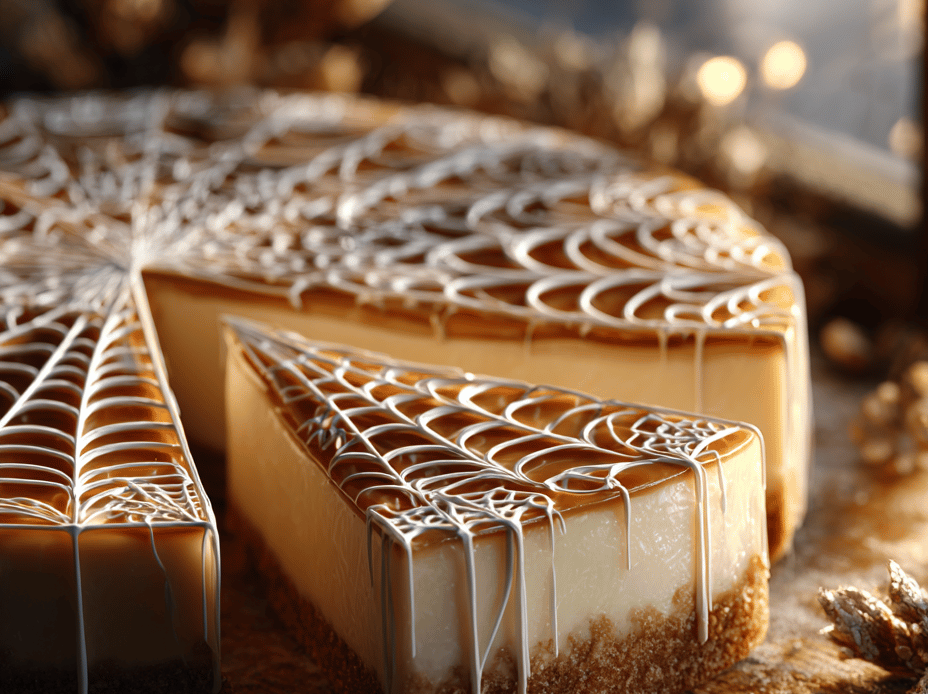
I first made this cheesecake during a quiet winter, craving something that looked as intricate as it was comforting. The web pattern became a meditative act, each strand a small victory amid the chaos of holiday prep. Its delicate design hides a rich, velvety filling that’s surprisingly forgiving to make once you get the hang of it. It’s a reminder that beauty in baking often comes from patience and a few simple, well-chosen ingredients.
Why This Cheesecake Makes Me Keep Coming Back
The contrast of textures and the visual intrigue of the web make it a rewarding bake. Every time I make it, I feel a little more patient, a little more creative. It’s a reminder that beauty can be woven into simple moments—like a slice of cheesecake, slowly enjoyed, with a web of chocolate as the finishing touch.
Key Ingredients, Honest Talk
- Digestive biscuits: Gives the crust a buttery crunch, but graham crackers work just as well.
- Cream cheese: The backbone of the filling, needs to be softened for smooth mixing.
- Sugar: Sweetens without overpowering, but honey can add a floral note.
- Eggs: Bind the filling, make sure they’re at room temp for easier mixing.
- White chocolate: Creates the web pattern—try it with dark for a striking contrast.
- Lemon zest: Brightens the filling, but skip if you prefer a more neutral flavor.
Tools of the Trade
- 20cm springform pan: To hold the crust and filling, easy to remove the cheesecake.
- Mixing bowls: For combining crust ingredients and filling.
- Electric mixer: To beat the cream cheese and sugar until fluffy.
- Rubber spatula: To fold ingredients smoothly.
- Parchment paper: To help with web pattern placement and cleanup.
- Toothpick or skewer: To create the web lines in the chocolate.
- Oven thermometer: For precise baking temperature.
Crafting the Spiderweb: Step-by-Step
Step 1: Preheat your oven to 160°C (320°F).
Step 2: Mix crushed digestive biscuits with melted butter until crumbly, then press into a 20cm springform pan.
Step 3: Bake the crust for 10 minutes, then set aside to cool.
Step 4: Beat cream cheese with sugar until smooth and fluffy, about 3-4 minutes.
Step 5: Add eggs, one at a time, mixing slowly. Incorporate vanilla extract and lemon zest for brightness.
Step 6: Pour the filling over the cooled crust. Prepare your spiderweb topping.
Step 7: Create the web pattern with melted white chocolate, starting from the center outward, then drag a toothpick to form strands.
Step 8: Bake for 55-60 minutes, until the edges are set but the center jiggles slightly.
Step 9: Let cool in the oven with the door ajar for 1 hour, then chill in the fridge for at least 4 hours or overnight.
Sweet Success Points
- The crust should be golden and firm when baked, not soggy or pale.
- Filling should be smooth, with no lumps or cracks appearing on the surface.
- The web pattern should hold its shape without melting or losing definition after baking.
Avoid These Cheesecake Fumbles
- Filling cracks or rises unevenly.? Gently tap the pan to release air bubbles in the filling before baking.
- Cracks or soggy crusts.? Wrap the pan in foil to prevent water seeping in during the water bath.
- Web smudges or melts into the filling.? Ensure web chocolate cools slightly before drawing lines.
- Dense texture or cracks.? Don’t overmix the filling; keep it light.
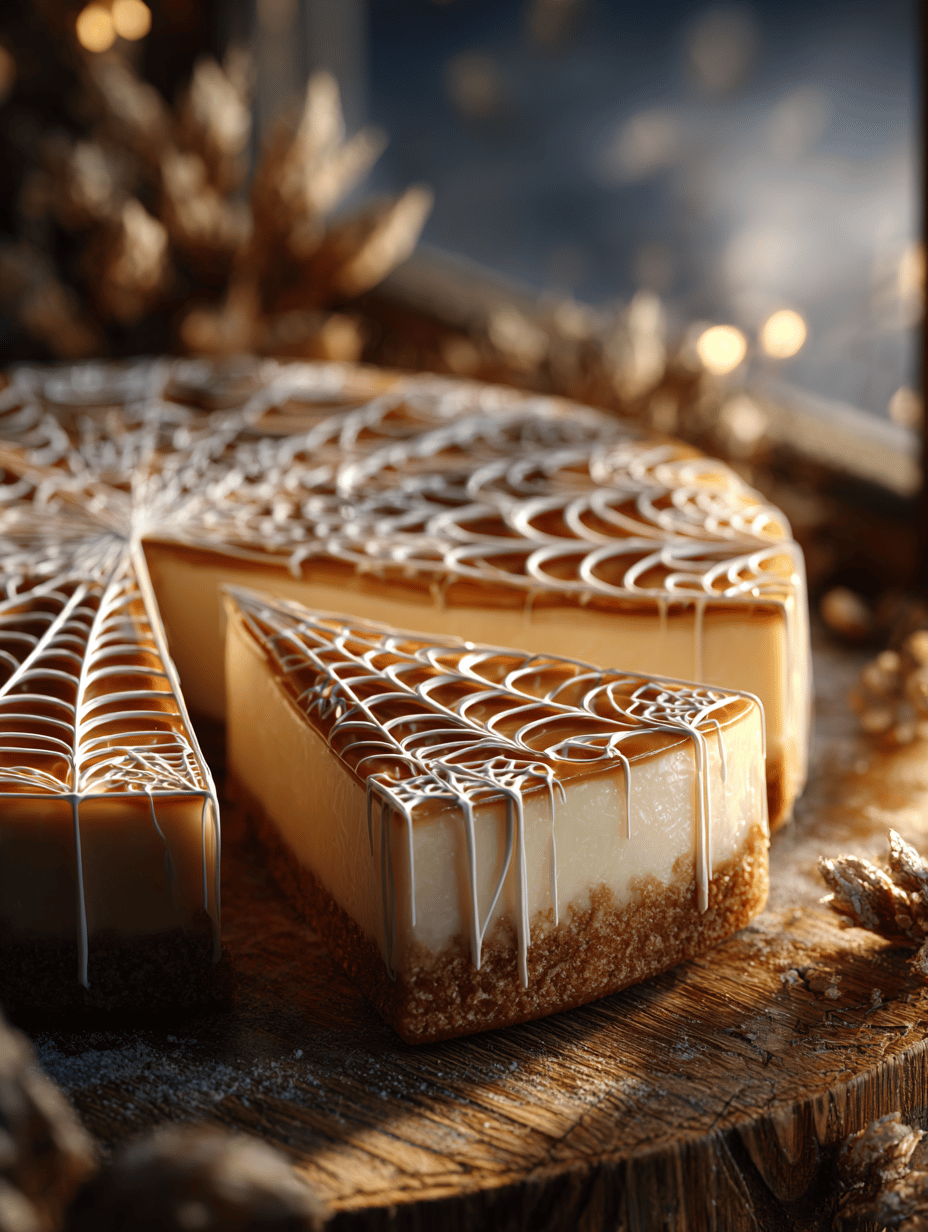
Spiderweb Cheesecake
Ingredients
Equipment
Method
- Preheat your oven to 160°C (320°F).
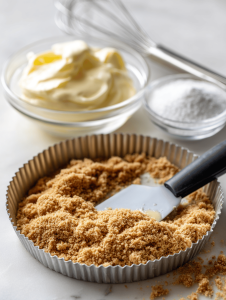
- Crush the digestive biscuits into fine crumbs using a food processor or by placing them in a plastic bag and crushing with a rolling pin.
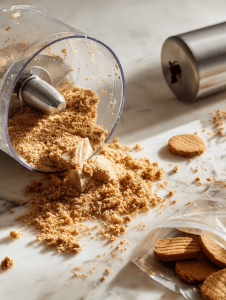
- Mix the biscuit crumbs with melted butter until evenly coated and the mixture resembles wet sand.
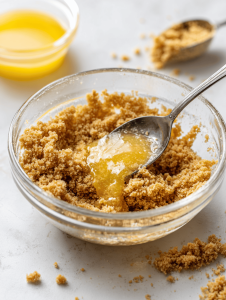
- Press the crumb mixture firmly into the base of a 20cm springform pan, smoothing it out with the back of a spoon or a flat spatula.
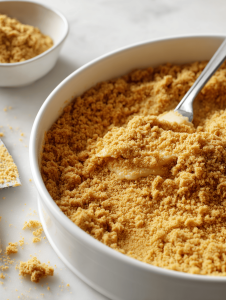
- Bake the crust for 10 minutes until lightly golden, then set aside to cool.
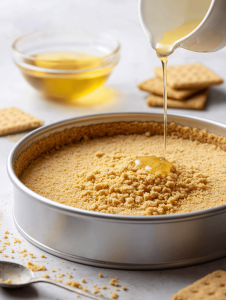
- In a large mixing bowl, beat the softened cream cheese with granulated sugar using an electric mixer until smooth, creamy, and fluffy—about 3-4 minutes.
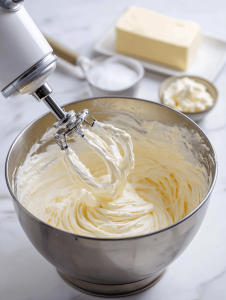
- Add eggs one at a time, mixing slowly after each addition to keep the filling smooth and prevent cracks.
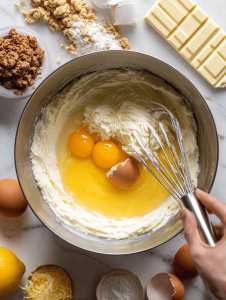
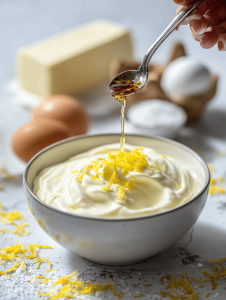
- Stir in vanilla extract and lemon zest, if using, to brighten the flavor of the filling.
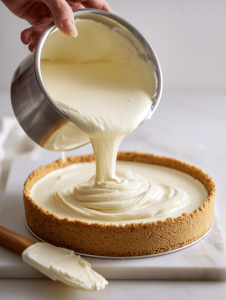
- Pour the filling over the cooled crust, smoothing the top with a spatula.
- Bake the cheesecake for 55-60 minutes until the edges are set but the center still jiggles slightly when gently shaken.
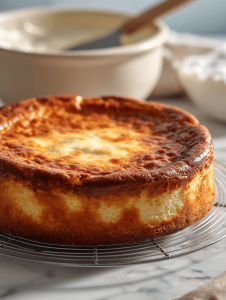
- Remove the cheesecake from the oven and let it cool in the pan with the door slightly open for 1 hour to prevent cracking.
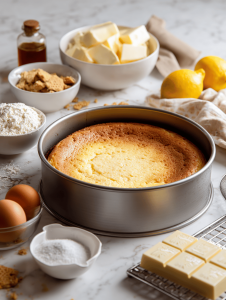
- Chill the cheesecake in the refrigerator for at least 4 hours or overnight to ensure it’s fully set.
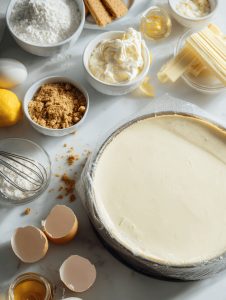
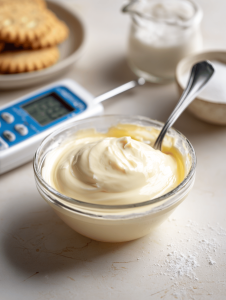
- Prepare your melted white chocolate and let it cool slightly until it’s warm but not hot.
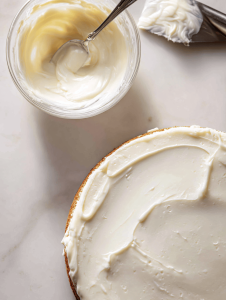
- Spread a thin layer of melted white chocolate over the top of the chilled cheesecake, then allow it to set for a few minutes.
- Using a toothpick or skewer, draw concentric circles and radial lines over the chocolate surface to create a web pattern, starting from the center and working outward.
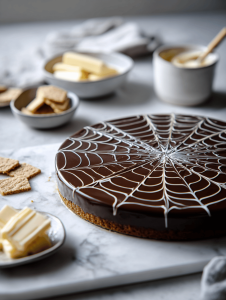
- Once the web pattern is complete and the chocolate is set, slice the cheesecake carefully and enjoy the stunning, creamy dessert with a beautiful chocolate web.
Notes

Hi, I’m Madison Greene, the creator behind Texture Obsessed. If you have ever fallen in love with the crunch of a perfectly toasted crust, the silkiness of a smooth custard, or the contrast between crispy and creamy in a single bite, then you already understand what inspires me.